California Prop 39 explained: The voter ID initiative on the Nov. 3 ballot
The constitutional amendment would require government-issued ID to vote in person and ID digits on mail ballots, plus citizenship checks of voter rolls.
By the Bay Area Brief staff · Edited by Seamus McKenna · · 3 min read
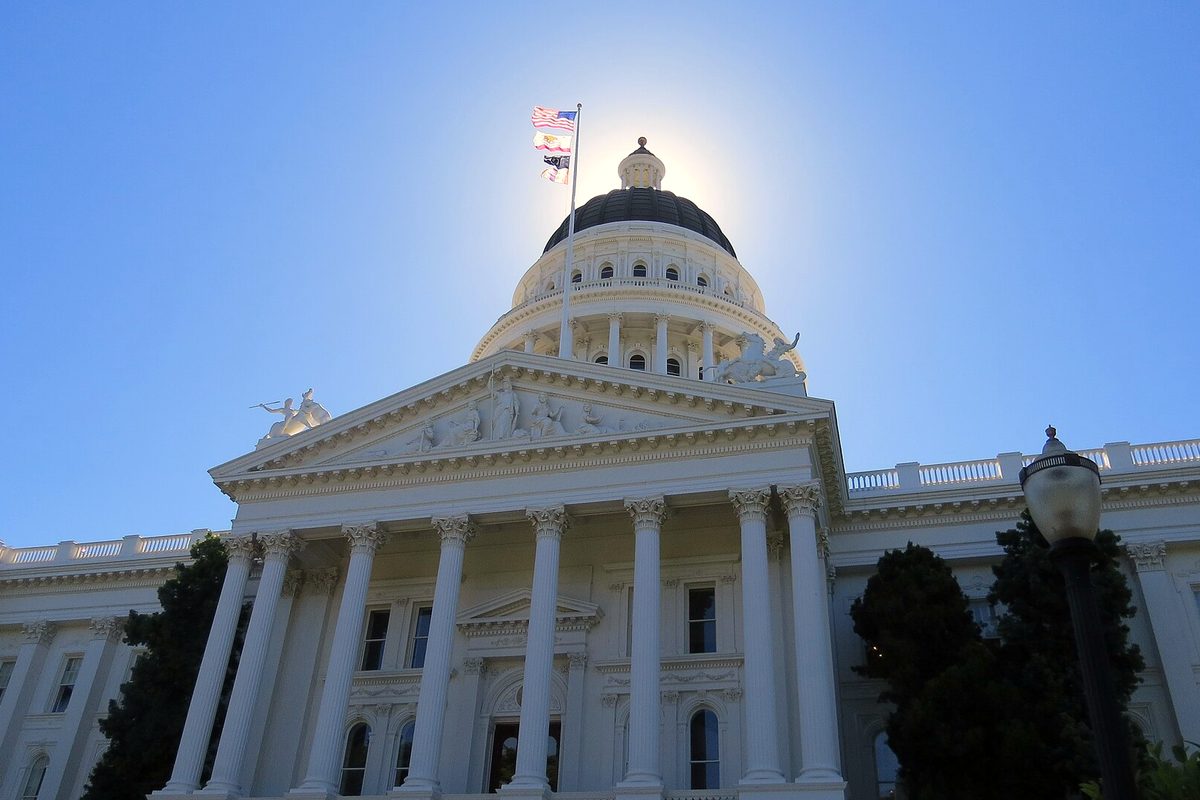
California State Capitol in Sacramento on a sunny day. Photo: Mackinacbridge / Wikimedia Commons, CC0 (cropped, resized and color-graded). Archive photo of the area; not a photo of the events in this story.
Proposition 39 would require Californians to present government-issued identification to vote, according to the Legislative Analyst's Office (LAO) and CalMatters.
Why it matters: About 16 million Californians voted in November 2024, and about 13 million of them voted by mail, according to the LAO. Prop 39 would change how all of them prove who they are.
How voting works now
In-person voters typically sign a roster. Mail voters sign their ballot envelope, and officials check those signatures before counting.
What it would do
Require government-issued ID to vote in person.
Require mail voters to write the last four digits of a government ID on their envelope.
Require officials to verify citizenship of registered voters using government data.
Have the state provide free voter ID cards.
The vote
A yes vote adds these requirements to the state Constitution. A no vote keeps signature-based identity checks.
The day's Bay Area housing, business and neighborhood news, plus the world headlines that matter, in one short email. Free, and you can unsubscribe anytime.
We use your email only to send the Brief. Details in our privacy policy.
A yes vote would make citizen-proposed local special taxes clear a two-thirds bar starting in 2027, the same as taxes placed on the ballot by city councils and county boards. A no vote keeps the simple-majority path open.
The measure would let CalHFA sell up to $25 billion in revenue bonds for second-mortgage loans covering up to 17% of a new home's price. Analysts say the state carries no direct cost, but big unknowns remain.
Half the money would go to a UC-affiliated institute chosen by the state public health department and half to research grants. Repayment would run about $500 million a year for 20 years.
The measure would require state auditor reviews of programs funded by new special taxes and bar new taxes from being excluded from the state spending limit.