
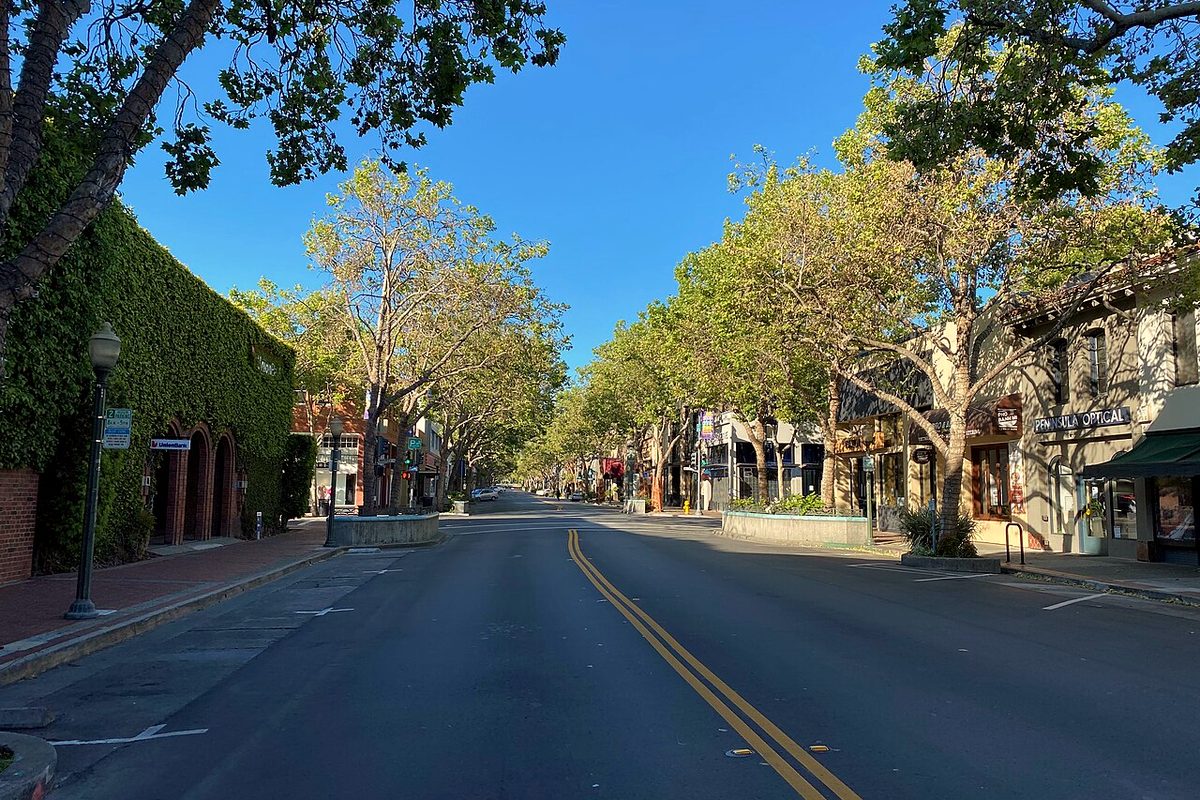
One of the Bay Area's best-preserved movie palaces is bringing back two family classics. Starting tonight, Oct. 29, the Stanford Theatre in downtown Palo Alto is showing Mary Poppins (1964) and The Wizard of Oz (1939) over two long weekends.
Showtimes
The program runs Thursday through Sunday, Oct. 29 to Nov. 1 and again Nov. 5 to 8, according to the theater's calendar:
- The Wizard of Oz: 5:35 and 10 p.m.
- Mary Poppins: 7:30 p.m., plus 3:05 p.m. on Saturdays and Sundays
Tickets and parking
Tickets are sold at the box office on the day of the show: $7 for adults and $5 for seniors 65 and over and youth 18 and under. The theater takes cash and credit cards. A $24 gift certificate is good for four admissions. The theater is at 221 University Ave. Two large public garages are within two blocks, one on Bryant Street just north of University and one on High Street just south. The Palo Alto Caltrain station is within walking distance.
Why Oz matters here
The theater has a history with The Wizard of Oz. The Stanford opened on June 9, 1925, as a movie palace with neoclassical, Persian and Moorish touches, built for about $300,000 and seating roughly 1,500. By the 1960s it had fallen on hard times. Its original organ had been removed, and the interior was so neglected that some moviegoers refused to go in.
In 1987, after Fred Astaire died, David Woodley Packard held a two-week Astaire festival there. It was so successful that his father, Hewlett-Packard co-founder David Packard, agreed to have the Packard Foundation buy the theater. The foundation paid $7.7 million and spent another $6 million restoring it, matching the original colors by studying more than 5,000 sketches. The theater held its grand reopening in 1989 with The Wizard of Oz. After another renovation in late 2017, with new paint, carpet and restored mohair seats, it reopened that December with Oz again.
Stay for the organ
The restoration included a Wurlitzer theater organ to replace the original, which had been sold for parts. Rebuilding it took two years and used a 1926 console from Grauman's Chinese Theatre and 1928 pipes from a Loew's theater. It's played live during intermissions and to accompany silent films.
Today the theater specializes in films made between 1910 and 1970. The Stanford Theatre Foundation, led by David Woodley Packard, says its mission is to bring back the experience of Hollywood's Golden Age, when films were meant to be seen on a big screen with a big audience. An annex off the lobby has a gallery of original movie posters.