
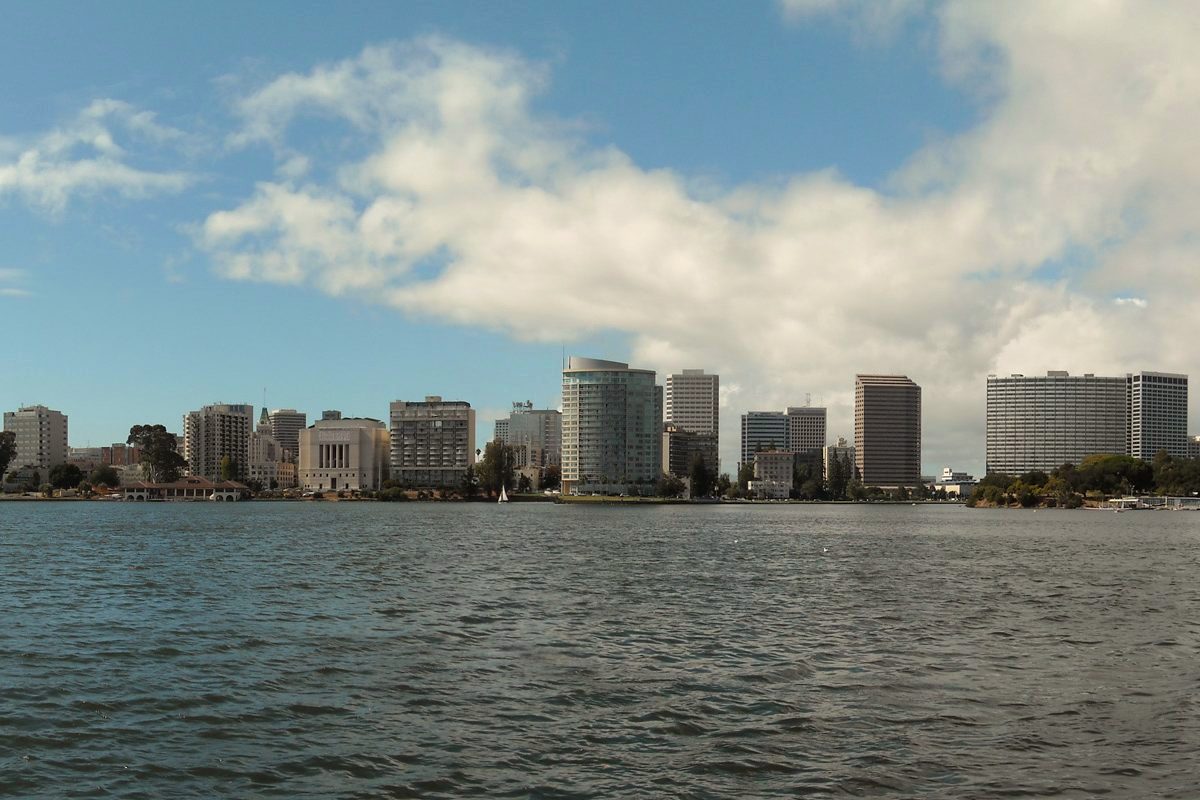
You can spot it from the Bay Bridge and hear it across half of Berkeley. Sather Tower, better known as the Campanile, is UC Berkeley's best-known landmark. UC Berkeley Visitor Services says it stands 307 feet tall and is the second-tallest freestanding clock and bell tower in the world. It's also one of the cheaper views in the Bay Area.
Going up
An elevator takes visitors to the observation platform, followed by 38 stairs. Because of those stairs, Visitor Services notes, the platform itself is not wheelchair accessible, but the esplanade and the lobby displays are. Wikipedia puts the observation deck about 200 feet above the base, with views of the campus, the hills, San Francisco and the Golden Gate.
Tickets are paid by credit card or Apple Pay only; no cash is accepted. UC Berkeley students, faculty and staff with a Cal 1 Card go up free. Cal Alumni Association members with ID pay $5. Backpacks, laptops, food and drinks aren't allowed in the elevator or on the platform, and there is a bag check in the lobby. Animals other than service animals aren't allowed in the building.
Upcoming closures
Visitor Services lists these schedule changes:
- Thursday, Nov. 26 through Sunday, Nov. 29: closed for Thanksgiving weekend.
- Friday, Dec. 4: open 10 a.m. to 2:30 p.m.
- Saturday, Dec. 19, 2026 through Sunday, Jan. 3, 2027: closed for winter break.
The page also warns that the tower can close with little notice.
When to hear the bells
Visitor Services lists three daily carillon concerts, at 7:50 a.m., noon and 6 p.m. Wikipedia says the weekday recitals at those times last about 10 minutes. The bells also toll the hour from 8 a.m. to 10 p.m.
The history
Jane K. Sather gave the tower in memory of her husband, banker Peder Sather, who is also the namesake of Sather Gate. John Galen Howard, who founded the university's architecture department, designed it. It was completed in 1915 and opened to the public in 1916, and it's nicknamed the Campanile for its resemblance to the Campanile di San Marco in Venice. The original 12 bells were cast in England and first rang on Nov. 3, 1917, for the Big Game against Washington. The chime was enlarged to 48 bells in 1979 and to the current 61 bells in 1983.
Two more things few visitors know. The tower's cool, dry interior stores many of the Department of Integrative Biology's fossils, mostly from the La Brea Tar Pits. And since 2017, a pair of peregrine falcons has nested at the top, followed by webcams and the Cal Falcons project.