
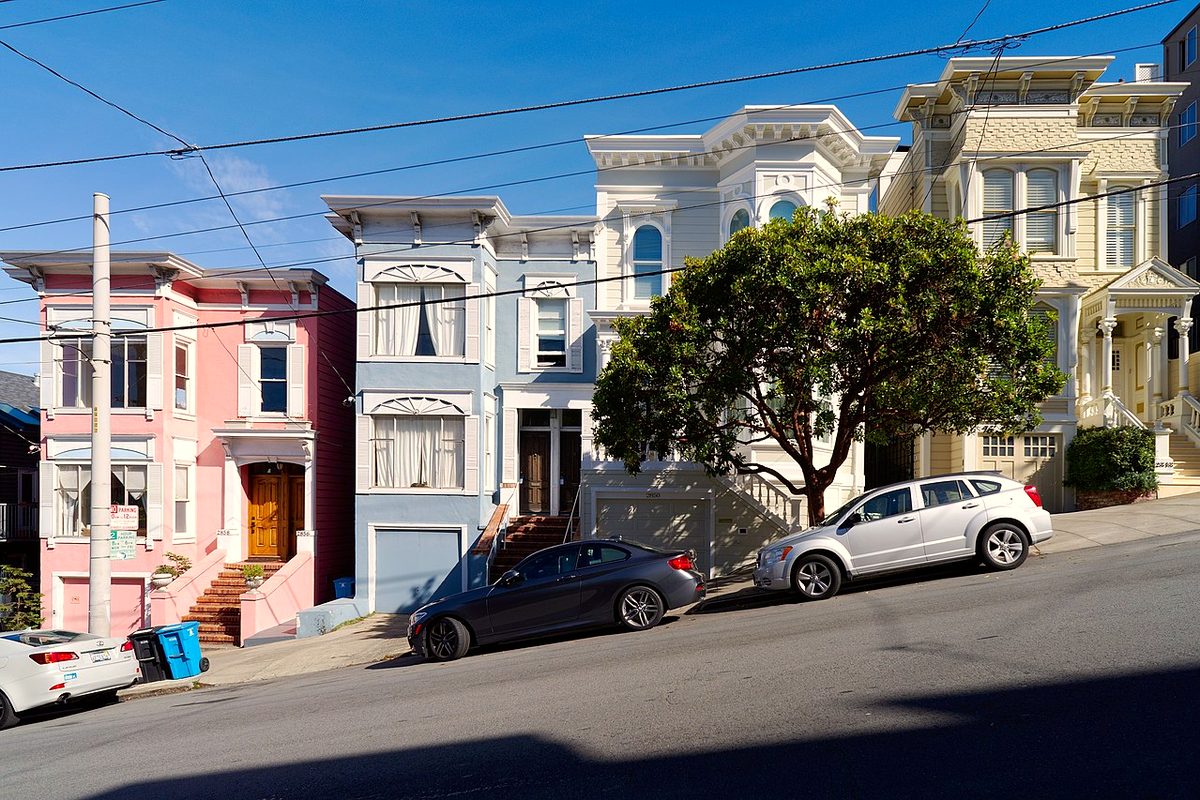
San Francisco’s Japantown, or Nihonmachi, covers about six blocks in the Western Addition. Its main street is Post Street between Fillmore and Laguna streets. The federal Advisory Council on Historic Preservation calls it the oldest and largest Japanese community in the country.
How Japantown formed
The ACHP says the neighborhood dates to 1906, when the earthquake and fire destroyed Japanese enclaves near Chinatown and South of Market, and families moved to the Western Addition. According to Wikipedia, by 1940 the area had more than 5,000 Japanese residents and more than 200 Japanese-owned businesses.
In 1942, Executive Order 9066 forced the city’s entire Japanese community, citizens and immigrants alike, into incarceration camps. People began returning in 1945. Then, in 1948, 27 blocks of the Western Addition, including much of Japantown, were chosen for one of the nation’s first large urban renewal projects. The ACHP says about half of Japantown’s core had been razed by 1960, displacing at least 1,500 residents and more than 60 small Japanese American businesses.
Japan Center and the Peace Pagoda
The Japan Center, which holds the neighborhood’s indoor malls, was dedicated in 1968 as part of redevelopment. Its stores include one of the few U.S. branches of Kinokuniya bookstore. In the Peace Plaza between the malls stands the five-tier Peace Pagoda. Tokyo architect Yoshiro Taniguchi designed it, and Osaka, San Francisco’s sister city, donated it in 1968. California Japantowns says its design was inspired by round pagodas in Nara, Japan’s ancient capital. The plaza hosts the Obon Festival, Aki Matsuri, Children’s Day and Cherry Blossom Festival events.
When to go
The Northern California Cherry Blossom Festival fills two weekends every April, and the Nihonmachi Street Fair takes place in August. The ACHP also points visitors to the self-guided Japantown History Walk, which covers about 10 blocks. On Bush Street, the Cottage Row historic district preserves a mews-style walkway lined with Victorian homes.
More Japanese heritage in the city: the Japanese Tea Garden.