
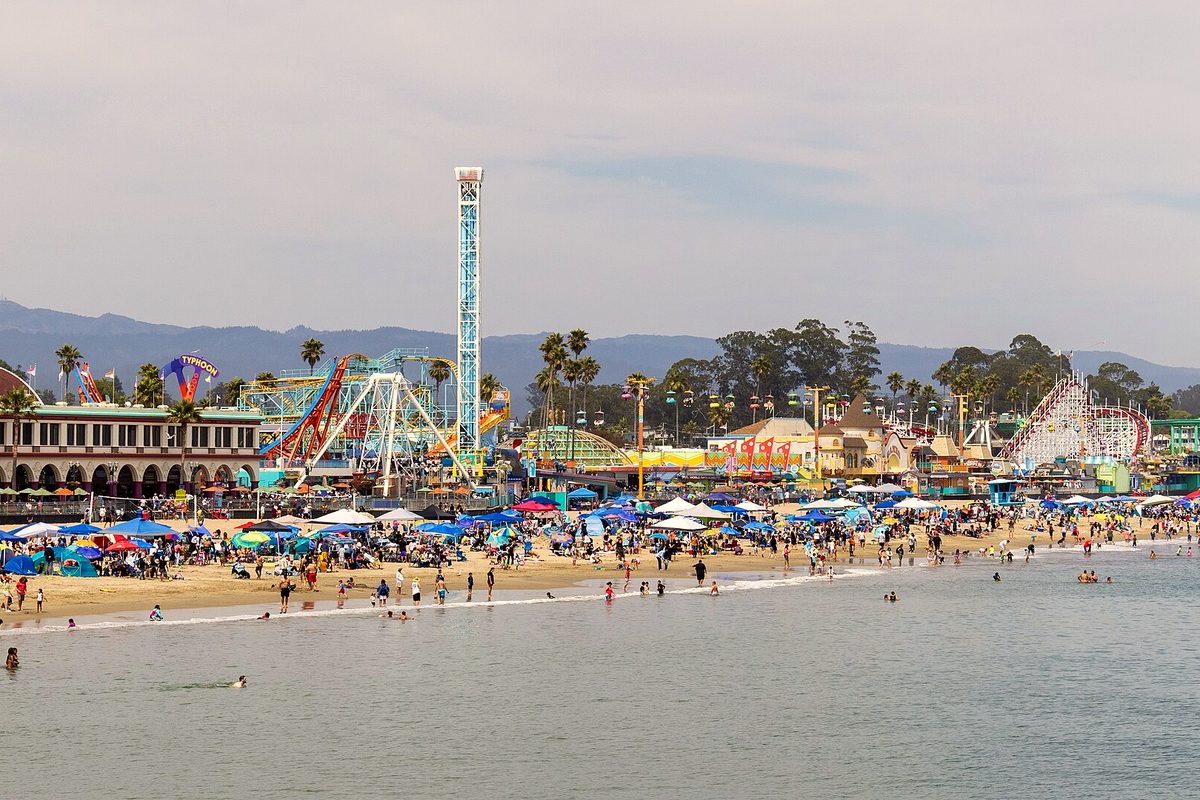
New Brighton State Beach sits on forested bluffs above Soquel Cove in Capitola. California State Parks lists a campground, hiking trails and wide views of Monterey Bay, a few steps above a sandy beach for fishing, beachcombing and, in warmer months, swimming. Wikipedia puts the park at 95 acres on Park Avenue off Highway 1, next to Seacliff State Beach.
Visiting
The day-use fee is $10 per car, or $9 for seniors 62 and older. Dogs must be on a leash no longer than 6 feet and attended. No license is needed to fish from the pier, but Department of Fish and Wildlife limits apply. Fires are allowed only in the fire rings provided, and must be attended. Alcohol is allowed only in registered campsites, and drones are banned. State Parks also prohibits climbing the unstable sandstone cliffs.
The campground has more than 100 tent and RV sites, including 11 RV hookup sites, and no hike-in sites. The Pacific Migrations Visitor Center in the campground looks at how people and animals have moved around the Pacific Rim. It is closed for the season.
After the 2023 storms
The early-2023 storms badly damaged New Brighton and neighboring Seacliff, and for a time public access was restricted. State Parks is now running a sea level rise vulnerability study for both beaches as part of its Seacliff Resilience project.
China Beach
Wikipedia says the cove was first called China Beach, after Chinese fishermen who settled there in the 1850s. As fishermen of other ethnicities arrived in the 1870s, many Chinese residents were forced out. The Chinese Exclusion Act of 1882 helped finish off the village, and by 1900 it was gone.
In the late 1870s, Thomas Fallon, an Irish immigrant and former mayor of San Jose, opened a small resort east of China Beach. He called it Camp San Jose, hoping to attract San Jose tourists. In 1882 he renamed it New Brighton, after the English seaside resort. The state bought the land in 1933.
Wildlife
Pelicans, dolphins, sea otters and sea lions frequent the cove. Wikipedia notes that in summer and early fall, thousands of sooty shearwaters, some from as far away as New Zealand, pass by hunting anchovies.