Google, Meta and TikTok Sue to Block California’s New Youth Social Media Law
Google, Meta and TikTok filed separate federal lawsuits challenging California’s Assembly Bill 1709, a law restricting addictive online features for children under 16. ABC7 and Reuters, published by GMA News, reported the filings Thursday.
By the Bay Area Brief staff · Edited by Seamus McKenna · · 2 min read
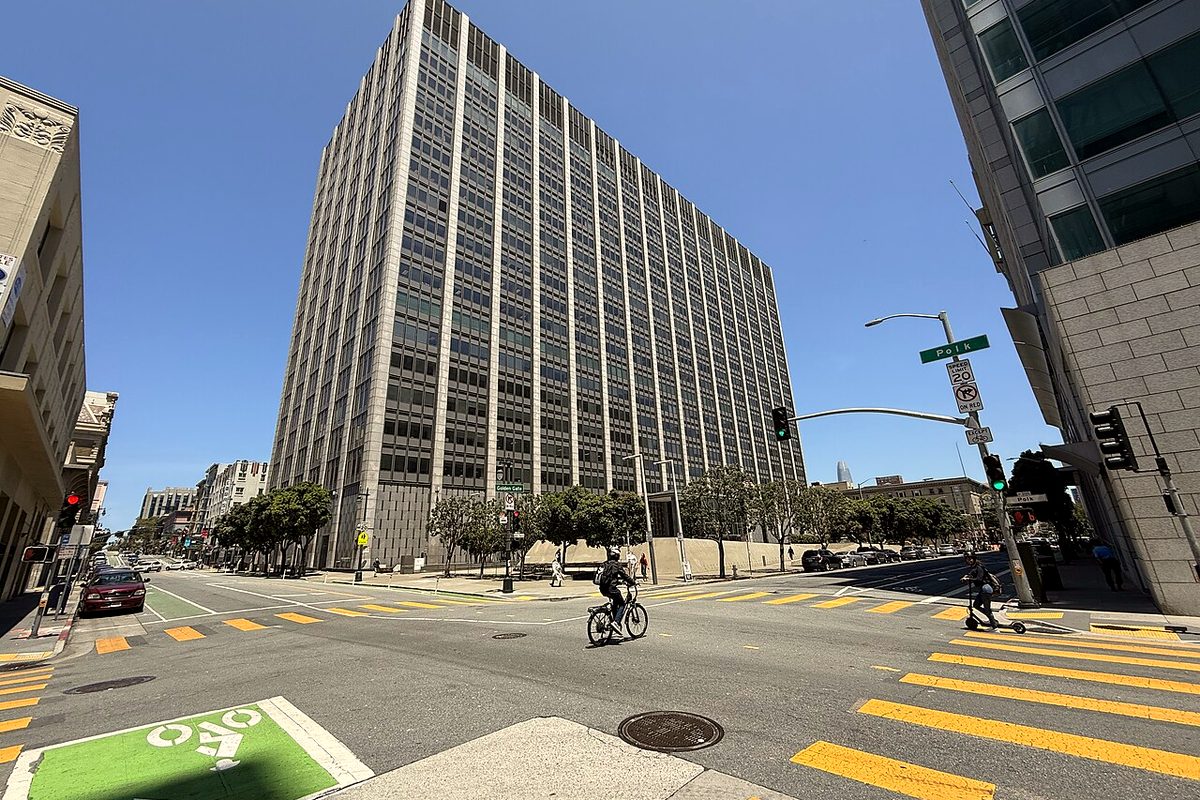
Phillip Burton Federal Building and U.S. Courthouse in San Francisco. Photo: Marincyclist / Wikimedia Commons, CC BY-SA 4.0 (cropped, resized and color-graded). Archive photo of the area; not a photo of the events in this story.
Google, Meta and TikTok filed separate federal lawsuits challenging California’s Assembly Bill 1709, a law restricting addictive online features for children under 16. ABC7 and Reuters, published by GMA News, reported the filings Thursday.
The law is scheduled to take effect Jan. 1, 2027. It targets features including personalized recommendations and autoplay and requires measures to keep younger users from accessing the restricted features.
The companies argue the law violates the First Amendment and Section 230 of the Communications Decency Act. California Attorney General Rob Bonta’s office told ABC7 it was reviewing the filings and remained committed to defending laws protecting children online. Filing suit does not itself block a law; that requires a court order or other legal action.
The day's Bay Area housing, business and neighborhood news, plus the world headlines that matter, in one short email. Free, and you can unsubscribe anytime.
We use your email only to send the Brief. Details in our privacy policy.
Meta CEO Mark Zuckerberg, Snap CEO Evan Spiegel and Instagram head Adam Mosseri are expected to testify. Plaintiffs' lawyers say the trial could run until mid-December.
Menlo Park-based Meta has settled with both teen plaintiffs in the Los Angeles social media addiction trial. It settled with K.D.B. on Friday, a day after settling with S.J. Terms are confidential. Snap is now the only defendant, with opening arguments set for Nov. 4.
Meta Superintelligence Lab released Muse Ember, a lightweight model for tool calls, coding subtasks and document parsing, priced at $0.10 per million input tokens and $0.50 per million output tokens.
Google DeepMind said Gemini Robotics 2.5, used with Apptronik’s Apollo 2 humanoid, reached a 96% success rate kitting parts on Mercedes-Benz lines in Germany and Hungary. The company also released a new robotics jailbreak benchmark.
Google DeepMind said AI agents, guided by researchers, formally verified key security properties of Signal’s cryptographic implementation in four weeks. The work does not verify the entire Signal app.