
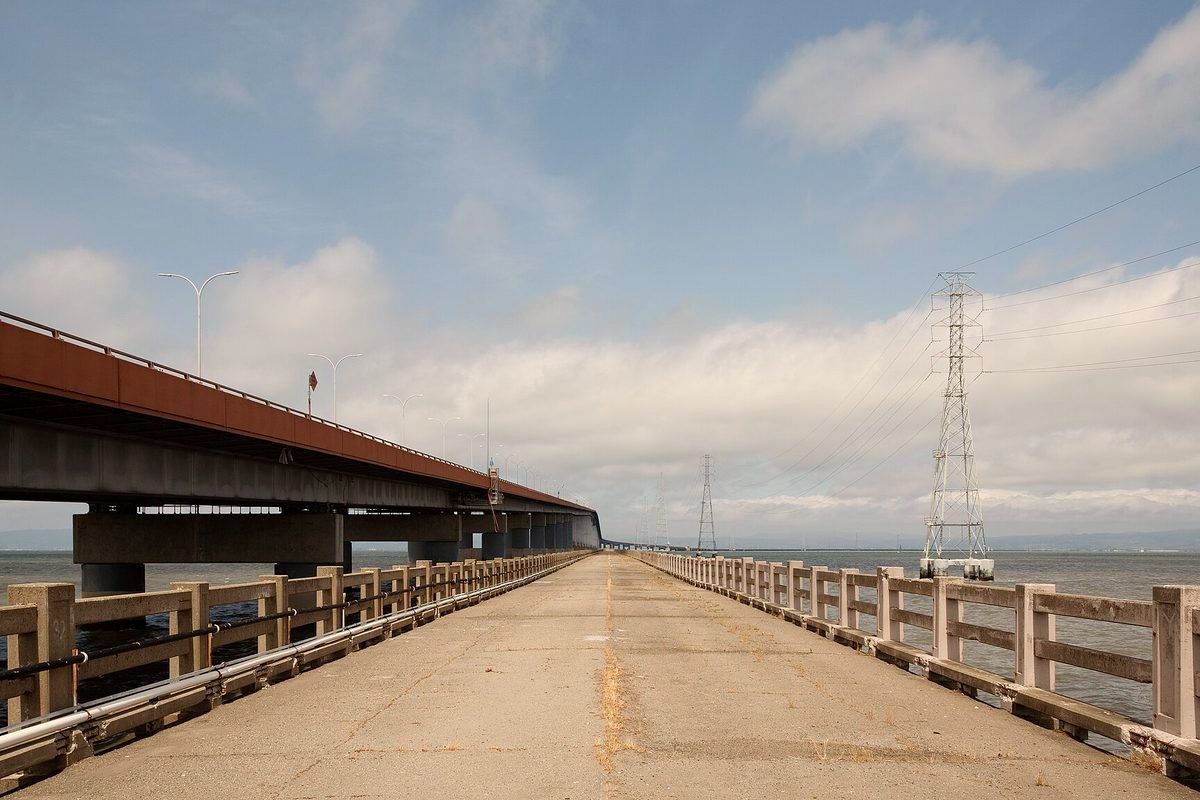
Drive across the Dumbarton Bridge and you're passing through a national wildlife refuge. The Don Edwards San Francisco Bay National Wildlife Refuge stretches along the marshy shoreline north and south of the bridge, and it was the first urban national wildlife refuge in the country. Fall is one of the best times to visit, as millions of shorebirds and waterfowl stop to refuel on their migration along the Pacific Flyway.
Saved from fill
The refuge's lands were once used by oyster growers and later salt producers. In the late 1950s and 1960s, plans to fill large parts of the bay for development spurred local activists to push back. Their work led to the 1965 McAteer-Petris Act, which created the Bay Conservation and Development Commission, and later to a campaign to turn the South Bay salt ponds into a wildlife refuge. A 1972 bill provided federal, state and local funding to buy the first land, and the refuge grew over the following decades as more salt ponds were bought. It was renamed in 1995 for Congressman Don Edwards, who championed protecting the South Bay's wetlands.
What you'll see
The Fish and Wildlife Service says fifteen habitat types exist on the refuge, with more than 340 plant species and 280 bird species. Look for white pelicans, white-tailed kites, hawks, ospreys and eagles. The refuge also shelters endangered residents like the California clapper rail and the salt marsh harvest mouse.
About 9,000 acres of salt ponds within the refuge are still worked by Cargill, which holds perpetual salt-making rights.
Visit
The headquarters and visitor center are at 1 Marshlands Road in Fremont, off Thornton Avenue next to Coyote Hills Regional Park, open 7 a.m. to 7 p.m. The Environmental Education Center in Alviso is open 7 a.m. to 5 p.m. Bair Island, in San Mateo County, is also part of the refuge.
Current closures
Levee repair work at Pond A2W began Aug. 31 and is scheduled to continue through November 2026, and the Song Sparrow Spur Trail is closed during construction. The service also warns that storm damage and deferred maintenance on more than 70 miles of berms and 40 miles of roads and trails have forced some partial closures, so check the refuge website before you go.