Berkeley Law Adds Course on Using AI in Litigation Without Surrendering Judgment
Berkeley Law is adding “Litigating With AI,” a summer course in its LL.M. Executive Track developed by professor Sean Farhang. The Daily Californian and the law school described a class focused on both the uses and risks of AI in civil and criminal cases.
By the Bay Area Brief staff · Edited by Seamus McKenna · · 2 min read
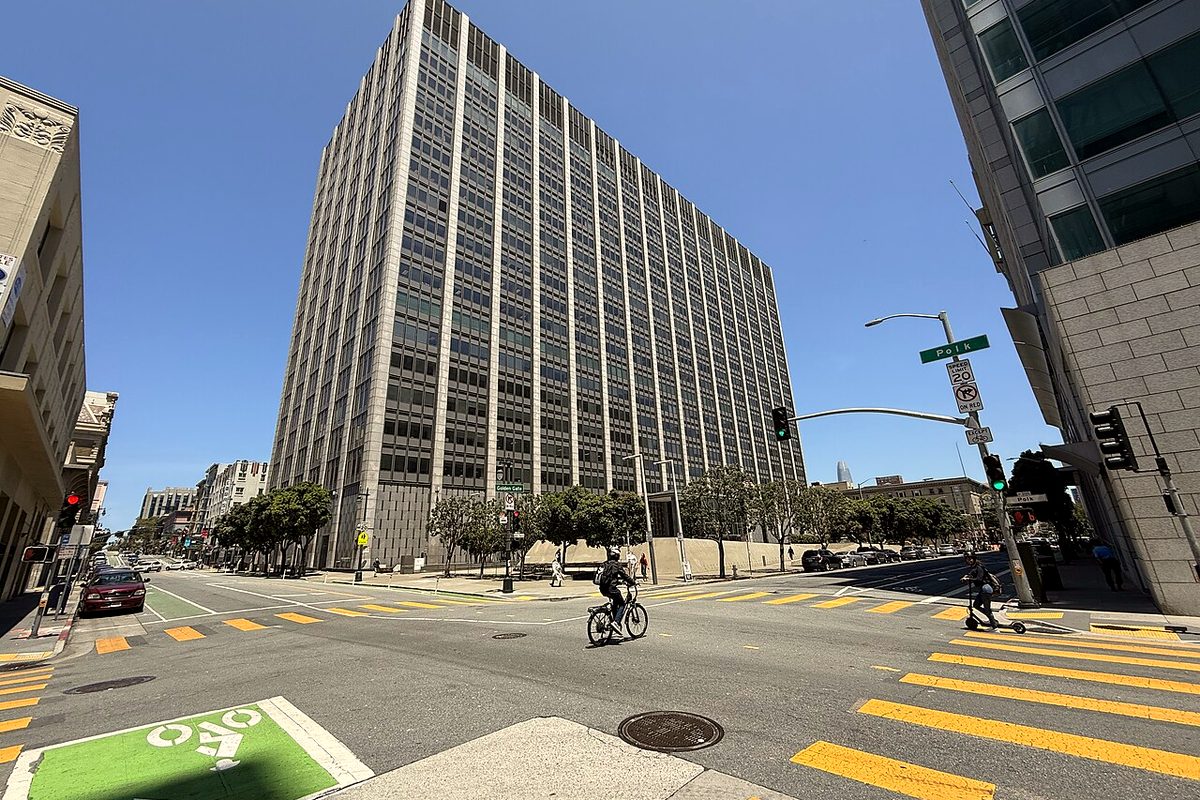
Phillip Burton Federal Building and U.S. Courthouse in San Francisco. Photo: Marincyclist / Wikimedia Commons, CC BY-SA 4.0 (cropped, resized and color-graded). Archive photo of the area; not a photo of the events in this story.
Berkeley Law is adding “Litigating With AI,” a summer course in its LL.M. Executive Track developed by professor Sean Farhang. The Daily Californian and the law school described a class focused on both the uses and risks of AI in civil and criminal cases.
Topics include protecting confidential information, checking AI-generated material, authenticating digital evidence, reviewing large document collections and evaluating predictions about case outcomes and settlement values.
The course also examines lawyers’ responsibility for errors, due process when courts use AI, and whether these tools narrow or widen gaps in access to justice. It is part of the school’s Certificate of Specialization in AI Law and Regulation.
The day's Bay Area housing, business and neighborhood news, plus the world headlines that matter, in one short email. Free, and you can unsubscribe anytime.
We use your email only to send the Brief. Details in our privacy policy.
One of the West Coast's oldest anthropology museums opens its gallery to the public on Fridays from noon to 4 p.m. Here's how to visit the Hearst Museum on the UC Berkeley campus.
The Essig Museum at UC Berkeley holds over 5 million insects and other arthropods. It's a research collection that opens to the public only on a few special days.
Most of the UC Museum of Paleontology's fossils are kept for research. A few, including a Tyrannosaurus rex, are on free public display in the Valley Life Sciences Building.
Steve Selvin, an emeritus professor of biostatistics at UC Berkeley who first posed and solved the Monty Hall problem in a 1975 letter, died Sept. 30 in Oakland at 85. A Berkeley native, he joined the School of Public Health faculty in 1972 and taught thousands of students. Berkeley has set up a scholarship fund in his name.