
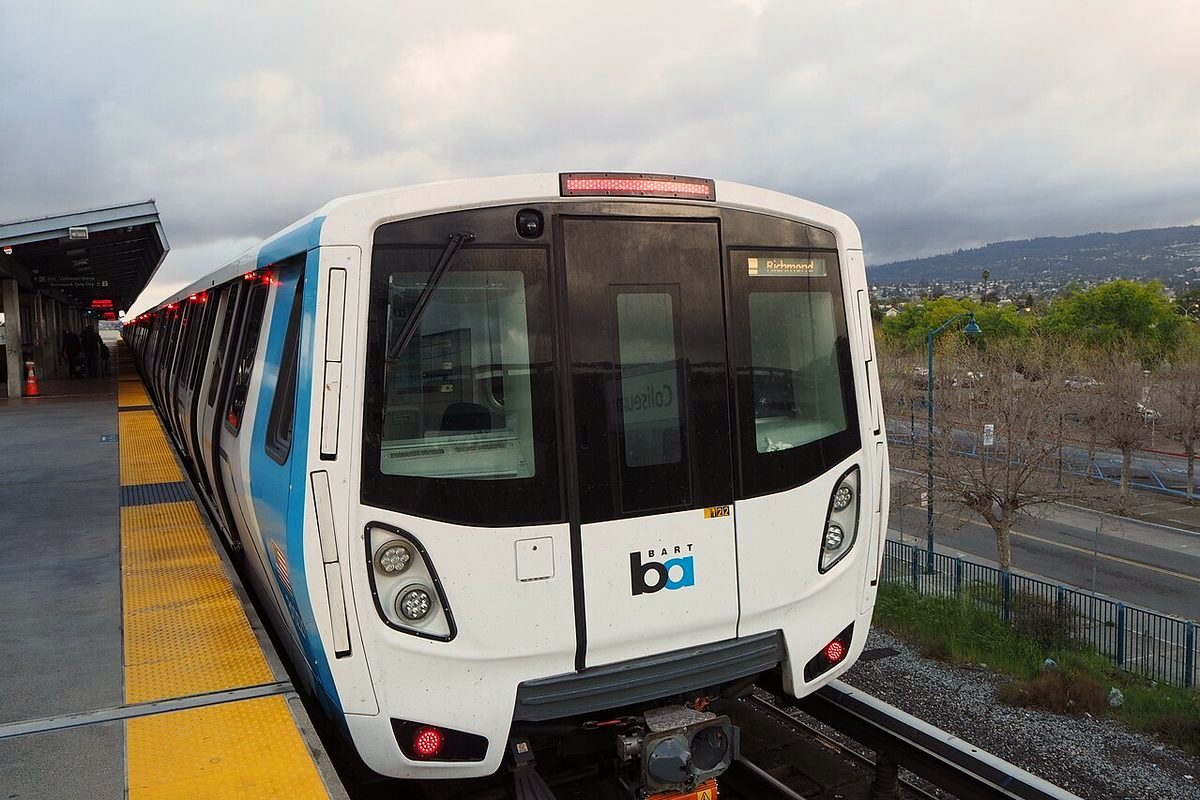
The biggest transit question on Bay Area ballots this year is Measure RTM, the Regional Transit Measure. It covers five counties: Alameda, Contra Costa, San Francisco, San Mateo and Santa Clara. Voters decide it on Tuesday, Nov. 3.
What it does
RTM is a sales tax that would last 14 years. The rate would be half a cent in Alameda, Contra Costa, San Mateo and Santa Clara counties and one cent in San Francisco, the Albany Scanner reported. The Scanner also reported that it would take effect April 1, 2027, and run through March 2041.
The tax would raise an estimated $980 million a year, mostly for operations at AC Transit, BART, Caltrain and Muni, the Scanner reported. SPUR, the urban policy group, said those four agencies carry more than 80% of transit trips in the region. SPUR also said most counties would get money for local transit and roads. It estimated about $264 million a year for Santa Clara County priorities and about $50 million for San Mateo County, after each county pays its regional share.
The measure also calls for independent financial reviews of BART, Muni, Caltrain and AC Transit. Agencies would have to carry out cost-saving recommendations to get the money, SPUR said.
How it got on the ballot
State Senate Bill 63, by Sens. Scott Wiener and Jesse Arreguín, allowed the measure. The Connect Bay Area Transit initiative then gathered signatures, and the district's elections official certified the petition on July 1, 2026, the Metropolitan Transportation Commission said. Because it is a citizen initiative, it needs a simple majority. The MTC said it needs a majority plus one of all votes cast across the five counties combined.
What happens if it fails
The Scanner reported that the four big agencies face a combined $800 million in operating deficits starting next year. BART's backup plan would cut train service hours by 63% starting in January 2027. Trains would stop at 9 p.m., run every 30 minutes and use three main lines instead of five. Fares and parking would rise 30%. BART has said it could close up to 15 stations or suspend service on as much as 25% of its tracks later.
SPUR said Caltrain could close up to 10 stations, end weekend service and run trains hourly. AC Transit's board is set to consider its own cut plan on Dec. 9, the Scanner reported.
Supporters and critics
SPUR backs the measure. It said reliable transit funding outweighs concerns that a sales tax is regressive. Opponents, led by the Committee for Affordable Bay Area Transit, say the tax falls hardest on lower-income residents and that agencies should cut costs first, the Scanner reported. An October poll reported by SFGATE found 48% support, 34% opposed and 18% undecided, the Scanner said.
San Francisco voters will also see Prop H, a Muni parcel tax. East Bay readers can see what RTM and local measures cost in Richmond and San Pablo. Voting guides: Alameda, Santa Clara, San Mateo and San Francisco.
How to vote
Election Day is Tuesday, Nov. 3. Polls and vote centers close at 8 p.m., and mailed ballots must be postmarked by Election Day and arrive within seven days. You can check your registration and ballot status at sos.ca.gov/elections. California lets you register and vote the same day at a vote center.